
Introduction
In today’s industrial landscape, efficient heat transfer is not a luxury — it’s a necessity. Whether it’s a dairy plant pasteurising milk, a chemical unit cooling process fluids, or an HVAC system maintaining building comfort, heat exchange plays a central role in keeping operations safe, energy-efficient, and cost-effective. Among the many technologies available, the plate heat exchanger has emerged as one of the most reliable and space-saving solutions for industries across India.
If you’re searching for a dependable Plate Heat Exchanger, understanding how these systems work — and what to look for in a manufacturer — can help you make an informed decision. Process Engineers And Associates is one such company, offering plate heat exchanger solutions designed to meet the practical needs of Indian industries. In this blog, we’ll walk through what plate heat exchangers are, their applications, their benefits, and how to choose the right partner for your heat-transfer requirements.
What is a Plate Heat Exchanger?
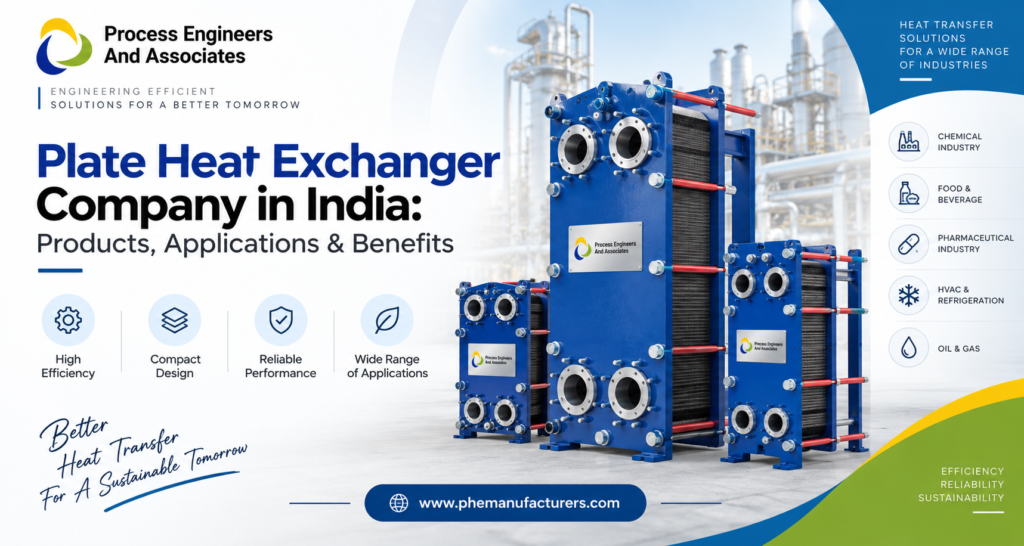
A plate heat exchanger is a type of heat exchanger that uses a series of thin, corrugated metal plates to transfer heat between two fluids. Instead of relying on a single large surface, as in traditional shell-and-tube exchangers, a plate heat exchanger stacks multiple plates together to create narrow channels through which hot and cold fluids flow alternately.
As the hot fluid passes through one set of channels and the cold fluid through the adjacent set, heat is transferred through the thin plate walls separating them — without the two fluids ever mixing. The corrugated pattern on each plate increases turbulence and surface area, which significantly improves heat-transfer efficiency compared to smoother, larger-surface designs.
This design gives plate heat exchangers a distinct advantage over many traditional heat exchangers: they are more compact, offer a higher heat-transfer rate per unit area, and are generally easier to maintain, clean, or expand by adding more plates as capacity requirements grow.
Products Offered by a Plate Heat Exchanger Company
A reliable plate heat exchanger manufacturer typically offers a range of products to suit different industrial needs, including:
- Gasketed Plate Heat Exchangers – Featuring removable plates sealed with gaskets, these are widely used where periodic cleaning, inspection, or capacity modification is required.
- Brazed Plate Heat Exchangers – Compact, permanently sealed units suitable for applications where a fully welded, leak-resistant design is preferred.
- Industrial Plate Heat Exchangers – Built for demanding process conditions across manufacturing, chemical, and processing industries.
- Custom-Designed Plate Heat Exchangers – Engineered around specific flow rates, temperatures, pressures, and fluid characteristics for applications that don’t fit standard configurations.
- Replacement Plates, Gaskets & Related Components – Spare parts and components that help extend the service life of existing plate heat exchanger systems.
A good plate heat exchanger company works closely with clients to understand their process parameters before recommending the right product, rather than offering a one-size-fits-all solution.
Applications of Plate Heat Exchangers
Plate heat exchangers are used across a wide range of industries because of their adaptability to different fluids, temperatures, and pressure conditions. Common applications include:
- Food and Beverage – Pasteurisation, sterilisation, and temperature control during processing.
- Pharmaceutical – Precise temperature regulation for sensitive formulations and processes.
- Chemical Processing – Heating and cooling of process fluids in manufacturing operations.
- Dairy – Milk pasteurisation, chilling, and CIP (clean-in-place) system integration.
- HVAC and Refrigeration – Efficient heat transfer for cooling and heating systems in commercial and industrial buildings.
- Power Generation – Cooling and waste-heat recovery applications in power plants.
- Oil and Gas – Heat exchange in upstream and downstream processing operations.
- Industrial Process Heating and Cooling – General-purpose applications across manufacturing units requiring controlled temperature environments.
This wide applicability is one of the reasons demand for plate heat exchanger suppliers continues to grow steadily across Indian industries.
Benefits of Choosing a Plate Heat Exchanger
Industries increasingly prefer plate heat exchangers over conventional alternatives for several practical reasons:
- High Heat-Transfer Efficiency – The corrugated plate design promotes turbulent flow, improving thermal performance.
- Compact Design – Plate heat exchangers occupy significantly less floor space than shell-and-tube units of comparable capacity.
- Space Saving – Ideal for facilities where equipment footprint is a constraint.
- Easy Maintenance – Gasketed units, in particular, can be opened for cleaning and inspection without extensive downtime.
- Flexible Capacity – Additional plates can often be added to increase capacity as process needs grow.
- Reduced Energy Consumption – Efficient heat recovery can lower overall energy usage in a facility.
- Cost-Effective Operation – Lower energy use and easier maintenance can contribute to reduced operating costs over time.
- Suitable for Different Industrial Processes – Compatible with a wide range of fluids, including corrosive or viscous media, depending on plate material and design.
These benefits make plate heat exchangers a practical choice for industries looking to balance performance with operational efficiency.
How to Choose the Right Plate Heat Exchanger Company in India
With multiple plate heat exchanger manufacturers operating in India, selecting the right partner requires careful evaluation. Here are some factors worth considering:
- Product Quality – Look for manufacturers who use quality materials and follow sound engineering practices.
- Manufacturing Capabilities – Understand the range of products and plate configurations a company can produce.
- Customisation Options – Check whether the company can design solutions around your specific process parameters.
- Material Selection – Options such as stainless steel plate heat exchanger designs are important for applications involving corrosive fluids or hygiene-sensitive industries.
- Technical Expertise – A knowledgeable technical team can help you select the right configuration for your application.
- After-Sales Support – Availability of spare parts, gaskets, and servicing support matters for long-term reliability.
- Industry Experience – Companies familiar with your specific industry are better positioned to recommend suitable solutions.
- Ability to Meet Application-Specific Requirements – The right company should be able to adapt its offering to your process, rather than expecting you to adapt to a fixed product line.
Taking time to evaluate these factors can help you avoid costly mismatches between your process requirements and the equipment you invest in.
Why Choose Process Engineers And Associates?
Process Engineers And Associates works as a Plate Heat Exchanger focused on helping Indian industries find heat-transfer solutions suited to their specific processes. Rather than offering only standard, off-the-shelf products, the company aims to understand each client’s application — including fluid type, temperature range, and capacity requirements — before recommending a suitable plate heat exchanger.
The focus is on practical, application-based solutions: helping customers select the right plate configuration, material, and design for their industry, along with the technical support needed to make an informed choice. For businesses exploring heat exchanger solutions in India, working with a company that prioritises understanding your process needs — rather than pushing a generic product — can make a meaningful difference in long-term performance and reliability.
To learn more about the range of products and how they may fit your specific requirements, it’s worth reaching out directly and discussing your application in detail.
Conclusion
Choosing the right plate heat exchanger company is an important decision that directly affects the efficiency, reliability, and cost-effectiveness of your industrial heat-transfer processes. From understanding how plate heat exchangers work to evaluating manufacturers based on quality, customisation, and technical support, taking a considered approach helps ensure you get equipment that truly fits your needs.
FAQs
1. What is the difference between a gasketed and a brazed plate heat exchanger?
A gasketed plate heat exchanger uses removable, gasket-sealed plates that allow for cleaning, inspection, and capacity changes. A brazed plate heat exchanger has permanently sealed plates, making it more compact but not designed for plate-by-plate maintenance.
2. Which industries commonly use plate heat exchangers in India?
Industries such as food and beverage, dairy, pharmaceuticals, chemical processing, HVAC, power generation, and oil and gas commonly use plate heat exchangers for various heating and cooling applications.
3. Are stainless steel plate heat exchangers better than other materials?
Stainless steel plate heat exchangers are widely used because of their corrosion resistance and suitability for hygienic applications like food and pharmaceutical processing. The right material ultimately depends on the specific fluids and operating conditions involved.
4. How do I know what size or capacity of plate heat exchanger I need?
The right size depends on factors like flow rate, inlet and outlet temperatures, fluid properties, and pressure conditions. It’s best to share these process details with a plate heat exchanger manufacturer so they can recommend a suitable configuration.
5. Can plate heat exchangers be customized for specific applications?
Yes, many manufacturers, including custom-focused plate heat exchanger companies, offer tailored designs based on the client’s specific process parameters rather than only standard models.
6. How often do plate heat exchangers need maintenance?
Maintenance frequency depends on the application and fluid type. Gasketed units generally allow for easier periodic cleaning and inspection, while brazed units require less frequent but different maintenance considerations. Consulting the manufacturer’s guidelines is recommended.
If you are looking for a reliable Plate Heat Exchanger Company in India? Explore Process Engineers And Associates’ range of plate heat exchanger solutions and discuss your specific process requirements at https://phemanufacturers.com/.
Call: 85274 55996
Mailto: sales@phe-india.in